Item No.: pot
Pot Magnet
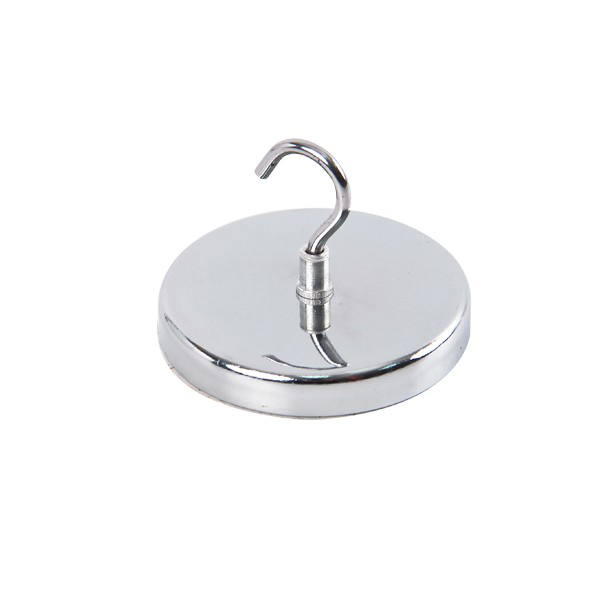
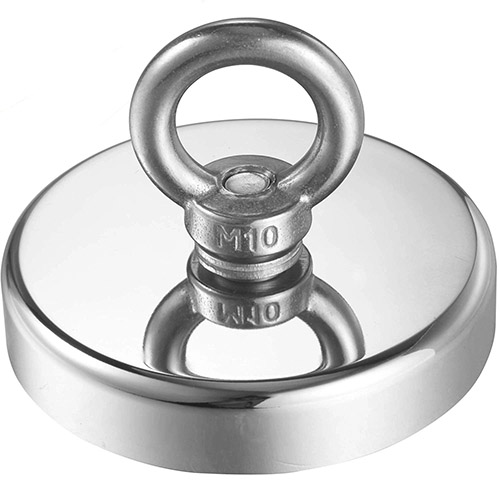
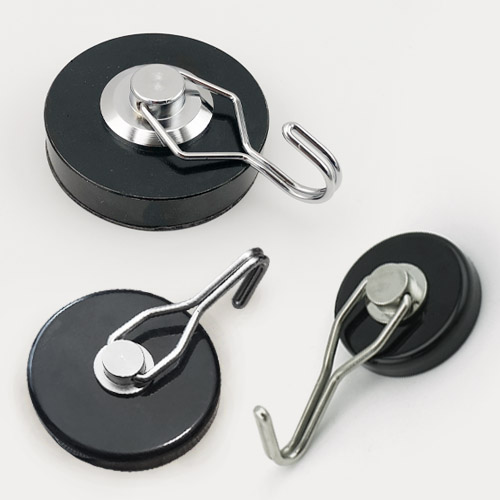
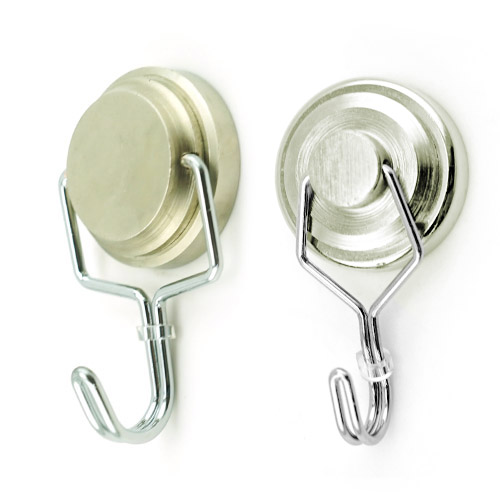
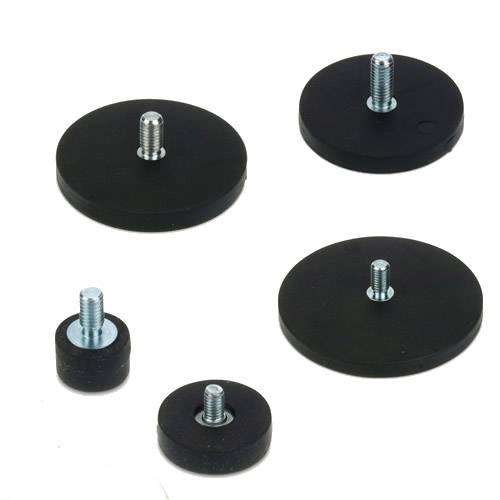
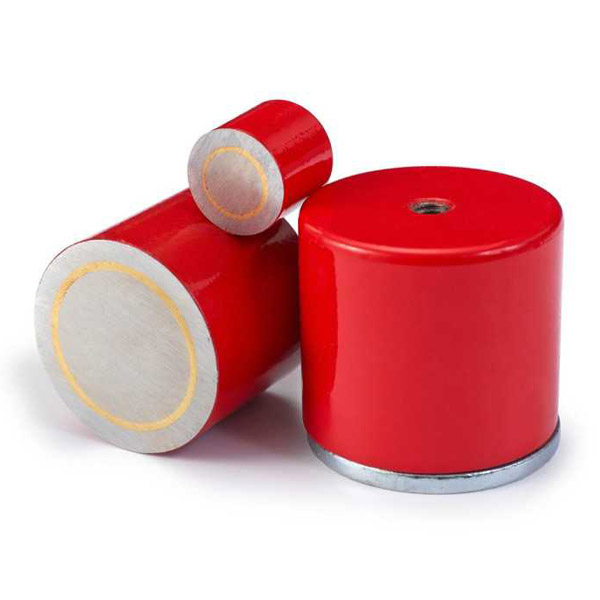
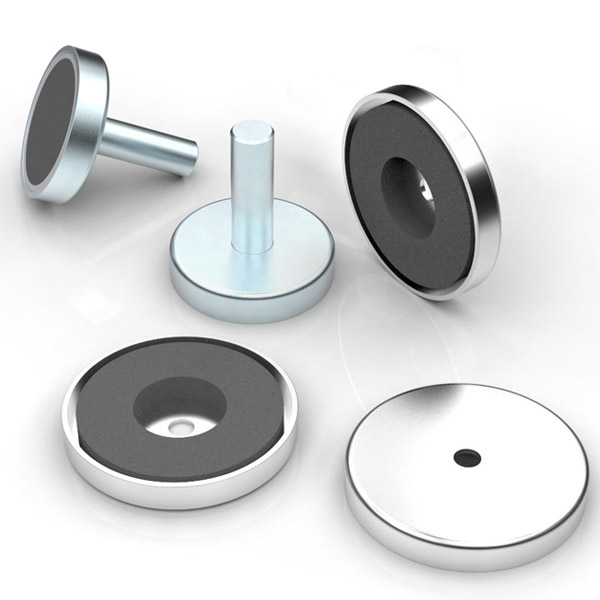
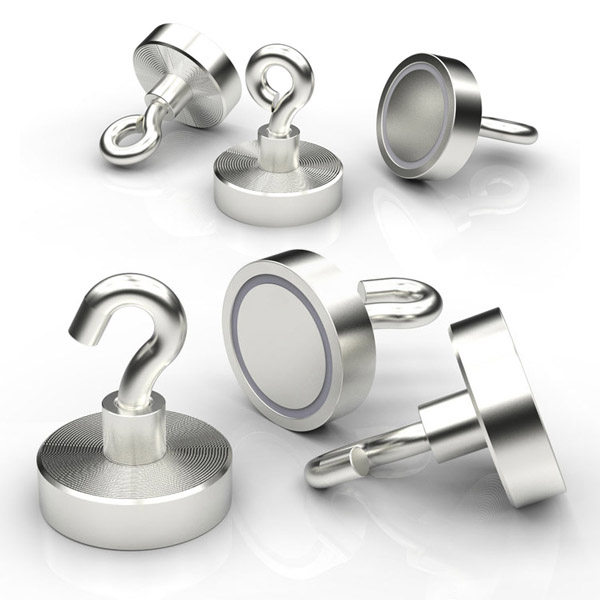
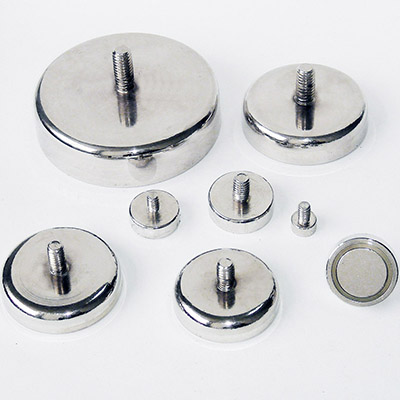
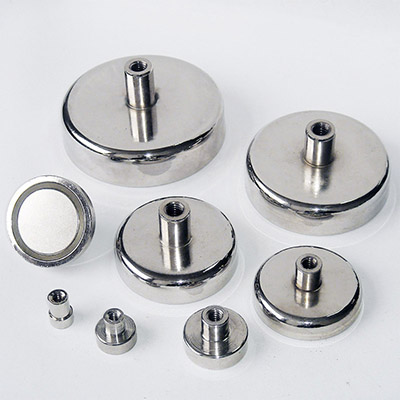
What is pot magnets? Pot magnets are made up of magnets (NdFeB, SmCo, AlNiCo or Hard Ferrite) and other spare parts, such as metal, plastic and rubber. Concentrate the magnetic force to achieve a many times higher force than the original magnet.
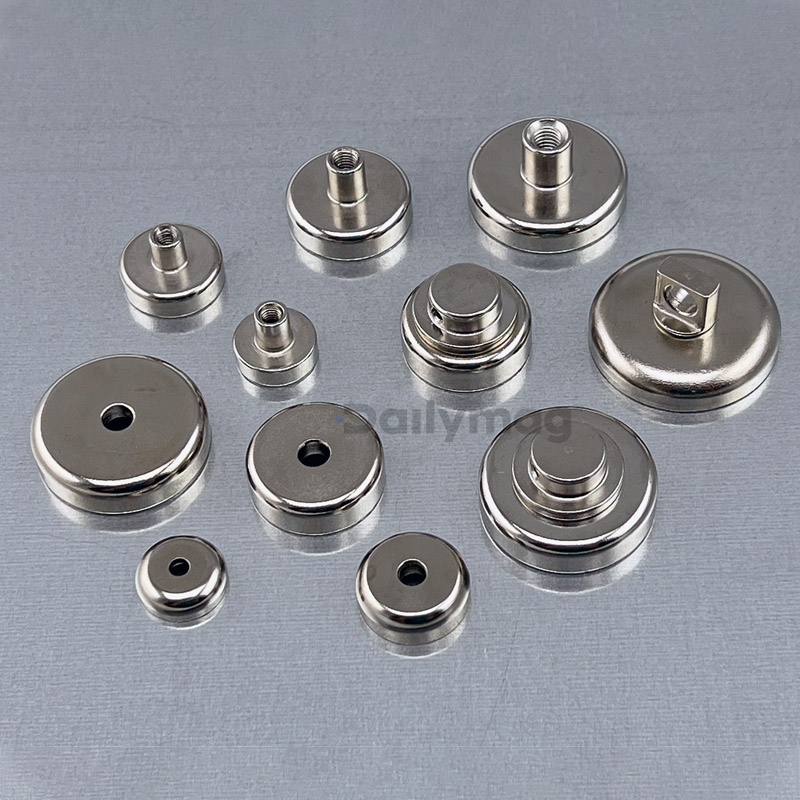
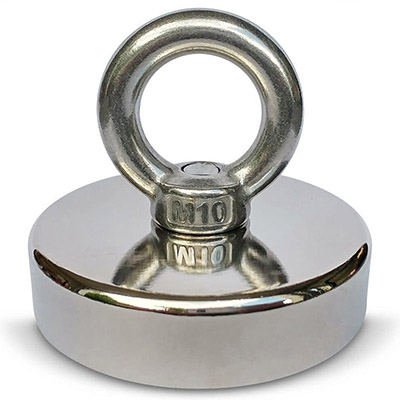
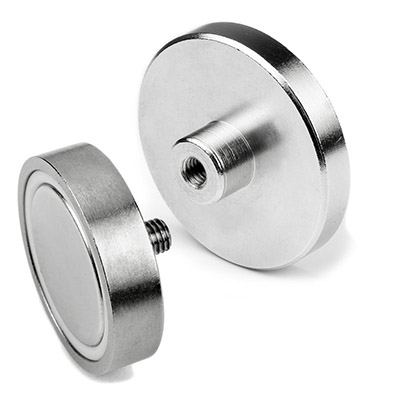
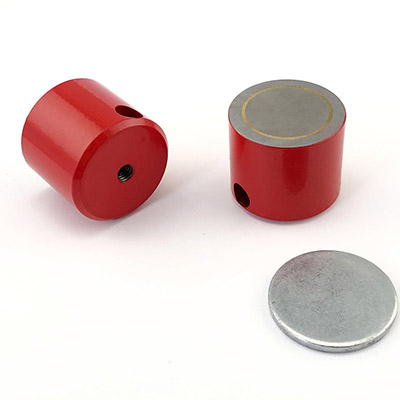
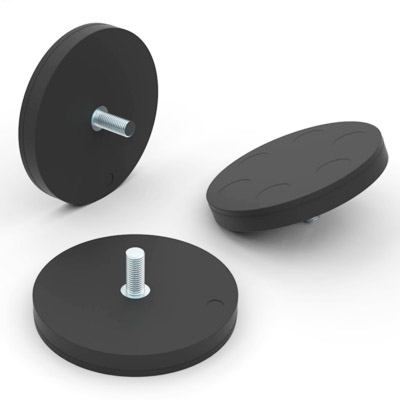
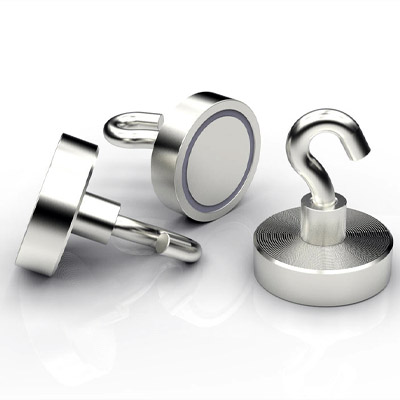
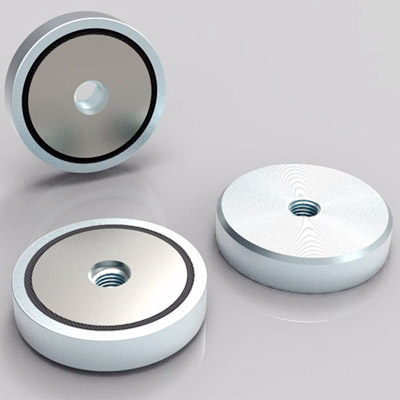
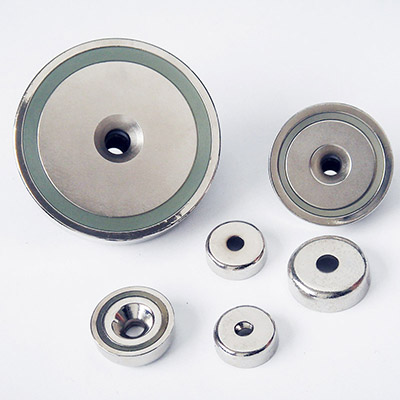
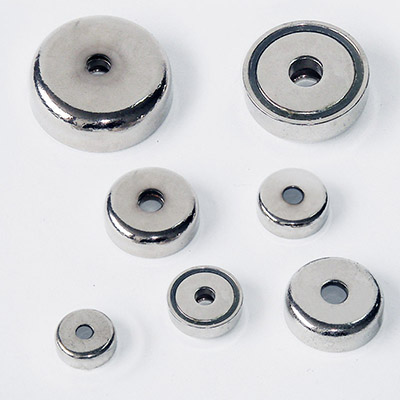
Typical Pot Magnets
 |  |
 |  |
 |  |
 |  |
 |  |
What is pot magnets?
Pot magnets are made up of magnets (NdFeB, SmCo, AlNiCo or Hard Ferrite) and other spare parts, such as metal, plastic, rubber and other components. Sometimes Pot magnets can meet some special requirements while a single magnet can not do. In the meantime, using pot magnets can save more cost than just using magnets and gain the same purpose.
We can design and manufacture various magnetic assemblies according to clients requirements.
How to choose a pot magnet?
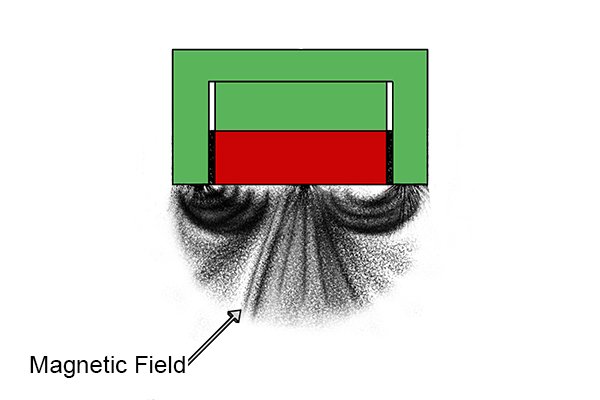
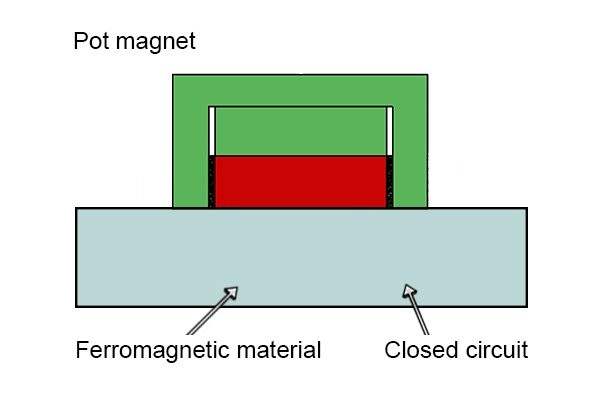
The basic principle of the holding or pot magnet is to direct and concentrate the flux from both magnetic poles to one active face. This is usually achieved with steel pole pieces or a steel-backing cup.
The standard selection can be broken down into three material types and there is a great variety of systems available. The following data should act as a simple guide:
1) Sintered Ferrite, this material offers a good performance from an inexpensive magnet, however, they tend to be bulky and are not always suitable where space is an important factor. The steel parts are plated & the Ferrite is inert thus corrosion is limited. Maximum operating temperature is +120 °C.
2) Cast AlNiCo, offers a better holding force than Ferrite systems and is the only pot magnet that can be heated to extreme temperatures. However, the high cost of the Cobalt content in the cast magnet makes the price prohibitive unless the application requires temperatures over +120°C up to a maximum of +500°C.
3) Rare Earth Samarium & Neodymium, pots and assemblies can offer up to eleven times the performance of a Ferrite system in a comparable size. Applications tend to be specialized engineering projects where performance and available space are key factors. Maximum operating temperatures are +60°C for the Neodymium and +150°C - +250°C for the Samarium depending on the design configuration.
When considering your selection, please be aware of the following factors: The stated Kg Pull (holding/gripping force) is based on the magnets retaining force against a direct pull when offered to a clean ground mild steel surface with a minimum thickness of 6mm. Painted or un-ground surfaces will reduce this force, assemblies working in shear will support approximately 1/3 of the stated value.
Fpr Neodymium Magnet Pot Magnet we are able to make:
* Diameter from 16mm - 150mm
* Neodymium Magnet grade from N35 to N52 & 38EH, working resistance temperature from 80°C - 200°C
* Also we can manufacture related steel assembly which can meet your working kit needs
Dailymag Magnetics factory have ISO9001:2015 certification and magnets pass RoHS test.
Dailymag NdFeB Pot Magnet (N35 grade) have 5 standard series. (Size and specifications may be adjusted with out notice, please confirm with us for latest details)
Conventional coating is Nickel or Zinc
| PC (Pot Magnet with Countersink Hole) |
|
|
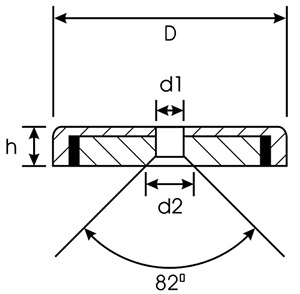
| Item-No. | D(mm) | h(mm) | d1(mm) | d2(mm) | Capacity(kg) |
| PC-16 | 16 | 6.5 | 5 | 9.2 | 5.5 |
| PC-19 | 19 | 6.5 | 5 | 9.2 | 9 |
| PC-25 | 25 | 8 | 6.4 | 12.2 | 22 |
| PC-32 | 32 | 8 | 6.4 | 12.2 | 34 |
| PC-38 | 38 | 9.5 | 6.4 | 12.2 | 41 |
| PC-44 | 44 | 9.5 | 6.4 | 12.2 | 68 |
| PC-51 | 51 | 13 | 8 | 15.2 | 81 |
| PC-64 | 64 | 16 | 8 | 15.2 | 113 |
| PC-76 | 76 | 19 | 8 | 15.2 | 164 |
| PR (Pot Magnet with Striaght Hole) |
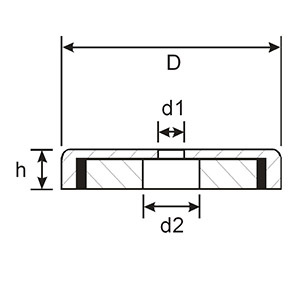 |
| Item-No. | D(mm) | h(mm) | d1(mm) | d2(mm) | Capacity(kg) |
| PR-16 | 16 | 6.5 | 5 | 9.2 | 5.5 |
| PR-19 | 19 | 6.5 | 5 | 9.2 | 9 |
| PR-25 | 25 | 8 | 6.4 | 12.2 | 22 |
| PR-32 | 32 | 8 | 6.4 | 12.2 | 34 |
| PR-38 | 38 | 9.5 | 6.4 | 12.2 | 41 |
| PR-44 | 44 | 9.5 | 6.4 | 12.2 | 68 |
| PR-51 | 51 | 13 | 8 | 15.2 | 81 |
| PR-64 | 64 | 16 | 8 | 15.2 | 113 |
| PR-76 | 76 | 19 | 8 | 15.2 | 164 |
| PS (Pot Magnet with External Thread Bolt) |
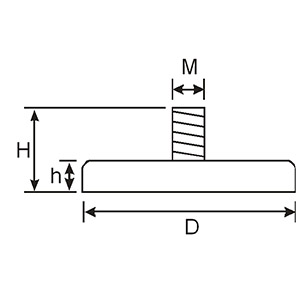 |
| Item-No. | D(mm) | h(mm) | H(mm) | M-threads (mm) | Capacity(kg) |
| PS-9.5 | 9.5 | 5 | 13 | 4.8 | 0.8 |
| PS-13 | 13 | 5 | 13 | 4.8 | 2.5 |
| PS-16 | 16 | 6.5 | 14 | 4.8 | 5.5 |
| PS-19 | 19 | 6.5 | 14 | 4.8 | 9 |
| PS-25 | 25 | 8 | 17.5 | 6.35 | 22 |
| PS-32 | 32 | 8 | 19 | 6.35 | 34 |
| PS-38 | 38 | 9.5 | 20.5 | 6.35 | 41 |
| PS-44 | 44 | 9.5 | 22 | 6.35 | 68 |
| PS-51 | 51 | 13 | 28.5 | 7.94 | 81 |
| PS-64 | 64 | 16 | 32 | 7.94 | 113 |
| PS-76 | 76 | 19 | 38 | 7.94 | 164 |
| PE (Pot Magnet with Internal Threaded Bush) |
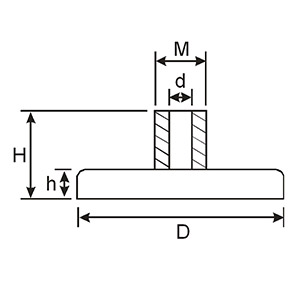 |
| Item-No. | D(mm) | h(mm) | H(mm) | d-threads(mm) | M(mm) | Capacity(kg) |
| PE-9.5 | 9.5 | 5 | 13 | 4.8 | 8 | 0.8 |
| PE-13 | 13 | 5 | 13 | 4.8 | 8 | 2.5 |
| PE-16 | 16 | 6.5 | 14 | 4.8 | 8 | 5.5 |
| PE-19 | 19 | 6.5 | 14 | 4.8 | 8 | 9 |
| PE-25 | 25 | 8 | 17.5 | 6.35 | 10.5 | 22 |
| PE-32 | 32 | 8 | 19 | 6.35 | 10.5 | 34 |
| PE-38 | 38 | 9.5 | 20.5 | 6.35 | 10.5 | 41 |
| PE-44 | 44 | 9.5 | 22 | 6.35 | 10.5 | 68 |
| PE-51 | 51 | 13 | 28.5 | 7.94 | 13 | 81 |
| PE-64 | 64 | 16 | 32 | 7.94 | 13 | 113 |
| PE-76 | 76 | 19 | 38 | 7.94 | 13 | 164 |
| PH (Pot Magnet with Hook, PE + Hook) |
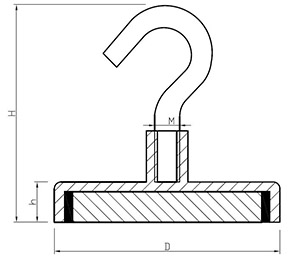 |
| Item-No. | D | h | H-overall height | M-threads for hook | Capacity(kg) |
| PH-16 | 16 | 6.5 | 35 | 4.8 | 5.5 |
| PH-19 | 19 | 6.5 | 35 | 4.8 | 9 |
| PH-25 | 25 | 8 | 48 | 6.35 | 22 |
| PH-32 | 32 | 8 | 48 | 6.35 | 34 |
| PH-38 | 38 | 9.5 | 51 | 6.35 | 41 |
| PH-44 | 44 | 9.5 | 51 | 6.35 | 68 |
| PH-51 | 51 | 13 | 64 | 7.94 | 81 |
| PH-64 | 64 | 16 | 67 | 7.94 | 113 |
| PH-76 | 76 | 19 | 70 | 7.94 | 164 |
Pot magnet:
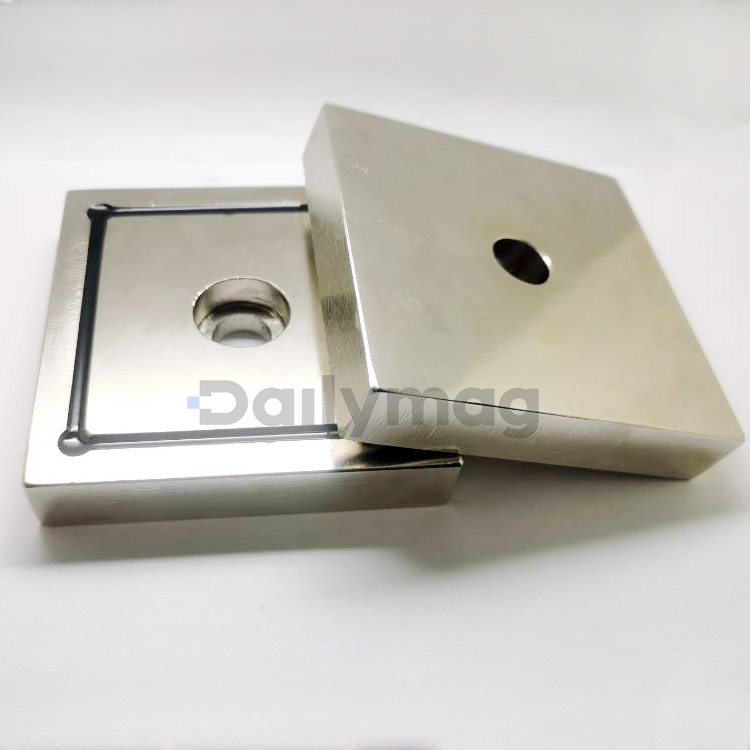
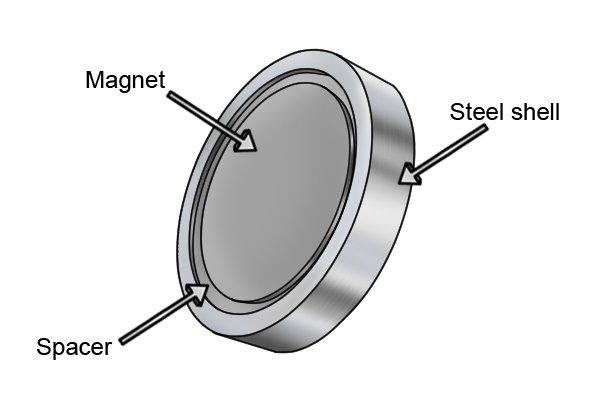
A pot-magnet is also called a mounting magnet. It consist of an intact steel covering retaining a permanent magnet inside it. Usually, pot magnets are made in round steel covering, but other forms are also available, i.e., rectangular. These magnets have magnetic attraction at one side. They are designed to clamp on steel surfaces. Mounting magnets should not be placed near other magnets because abrupt attraction can cause damage. They contain a dense and shallow magnetic field. Pot magnets are usually manufactured with a small hole at their center. Sometimes, the hole is replaced with a hook or collar to make it more convenient for mounting. The main applications of pot magnet include fixture, clamping and gripping. Usually, a permanent neodymium magnet is used to form a pot magnet, while we also form pot magnets with Alnico magnets. Besides a steel case, a spacer aluminum ring is also present. We can also customize the pot magnet design, size, magnetic force, and cost relative to our customers' requirements.
General features:
• The depth of the pot makes it stable and enables it to perform well.
• The steel case prevents magnetic flux leakage.
• The magnetic north pole is kept in the central region of magnet surface.
• The neodymium-containing magnets are advised to be operated at the temperature limit of about 400°C.
• The pot magnets with Alnico magnets can, however, be employed at a higher temperature.
Diversity of pot magnets:
There are several different forms of pot magnets based on the type of attachment or projections they have. These projections keep the magnet connected to the objects to be hanged or lifted, i.e., gauging articulated arms and supermarket posters or signs. There are five main types of pole magnets which are briefly described as follow:
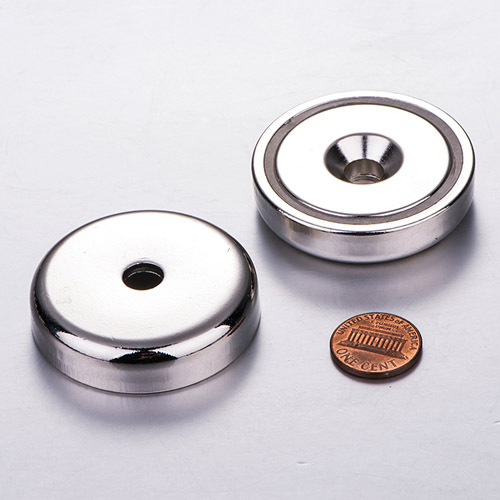
Countersunk:
• Countersunk contain a hole at 82 degrees into the magnet's center.
• This countersunk hole provides an attachment site for screws so that screw flush into the hole and level with the pot magnet’s external surface.
• The total diameter (mm) of the countersunk hole should be equilateral to the diameter of the screw to be fit into it.
• They are available, ranging from M3 to M14.
Internal threaded magnet
• These contain a narrow cylindrical threaded hole in their center containing spiral rings throughout the hole's inner lining.
• Internal threaded magnets can attach non-ferromagnetic bolts, which contain grooves corresponding to the magnet's spiral rings.
• Threaded bolts and studs of range M4 to M20 can be fixed into it.
• There can be one to three threaded holes in a magnet to ensure maximum stability.
• Its use as a support for a gauging arm of articulated machinery has also been reported.
• There are further two types of a threaded magnet: shallow and deep threaded magnets.
• The shallow threaded magnets are relatively less thick as compare to the deep internal threaded magnets. The former is used to hang decorations at height, while the latter is used when their application is not heightened.
Trough hole pot magnet:
• These pot magnets contain a wide hole at their center, allowing bolt attachment to the non-ferromagnetic region. As the bolt is not directly clamped on the magnet, there are fewer brittle magnet chances to break.
• The wide hole is named a boss, and it ranges from 4mm to 20mm in diameter.
• The bolt's choice to be attached depends upon the boss's diameter. It is because magnet and bolt has a gap between them.
• The diameter of the bolt should be equal to the hole present in the shell of this magnet.
• A trough hole pot magnet have an application of metal objects retrieval in treasure hunting.
• Tow lights are also attached to damaged cars as an indication via trough hole pot magnet.
Stud pot magnet:
• These pot magnets contain a cylindrical protruding stud at their top, which attaches them to the required surface.
• These are usually used to hang objects from ceilings.
• These are further categorized into other forms:
• Internal thread containing stud pot magnet contains a cylindrical threaded hole in the stud where studs and bolts can be fixed. It can fix the threaded bolts or hooks of range M4 to M20.
• The external thread containing stud pot magnets have studs with spiral threads on their exterior surface.
• The plane stud pot magnets contain studs with no threading. These are used in the retrieval of non-ferromagnetic objects.
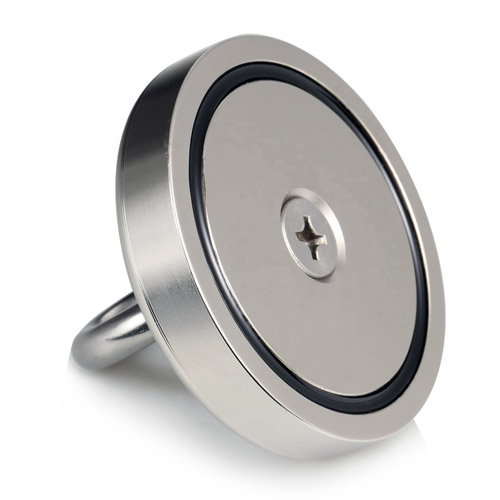
Bi-pole pot magnets
• As the name indicates, these magnets are sandwiched between two thin steel poles fitted inside the shell case.
• This sort of assembly makes a bi-pole pot magnet many times stronger than an ordinary magnet.
• This unique assembly makes these types of magnets very strong as compared to any other ordinary magnet.
Advantages of pot magnet:
• The pot magnets of small size can provide more magnetic strength because the magnetic flux is adjusted more at one side.
• Pot magnets are cost-effective. Small rare-earth magnets, when encased in steel covering, provide more strength.
• Pot magnets are more durable because the brittle permanent magnets remain protected in a rigid steel case.
• Different mounting projections, hooks, or holes enable them to hold and lift many accessories.
Regular magnet Vs pot magnet:
A regular magnet tends to crack under strong external force, while a pot or mounting magnet is more resistant towards cracks or chipping off because of the presence of a strong steel case. Irrespective of a regular magnet, a pot magnet can attract the ferromagnetic objects from one side only because its magnetism is concentrated at one side. It enhances the magnetic strength of the magnet.
Applications:
The diverse variety pot-magnets are employed in different applications. Some of them are listed below:
• The countersunk pot magnets are used for handing advertisement display screens.
• Stud pot magnets (internal threaded) are used to hang the lights, banners, or signs from the ceiling.
• These are also used in door stops. These help the door from abrupt close.
• Internal treads bearing pot-magnets are also used for hanging purpose by fitting a hook in their threads.
• Bipolar magnets are used to control the movement of other materials, just like a jig.
magnetic pot assembly, pot magnet, pot magnets, permanent magnet, ndfeb, ndfeb magnet, sintered ndfeb, neodymium iron boron, smco, smco magnet,samarium cobalt, ceramic magnet, hard ferrite magnet, alnico, cast alnico, rubber magnet, flexible rubber magnet, magnetic toy, magnetic tool, magnetic assembly, magnet, permanent magnets